Institute for Model-based Q&C of Additive Manufacturing (IMQCAM)
Current Research
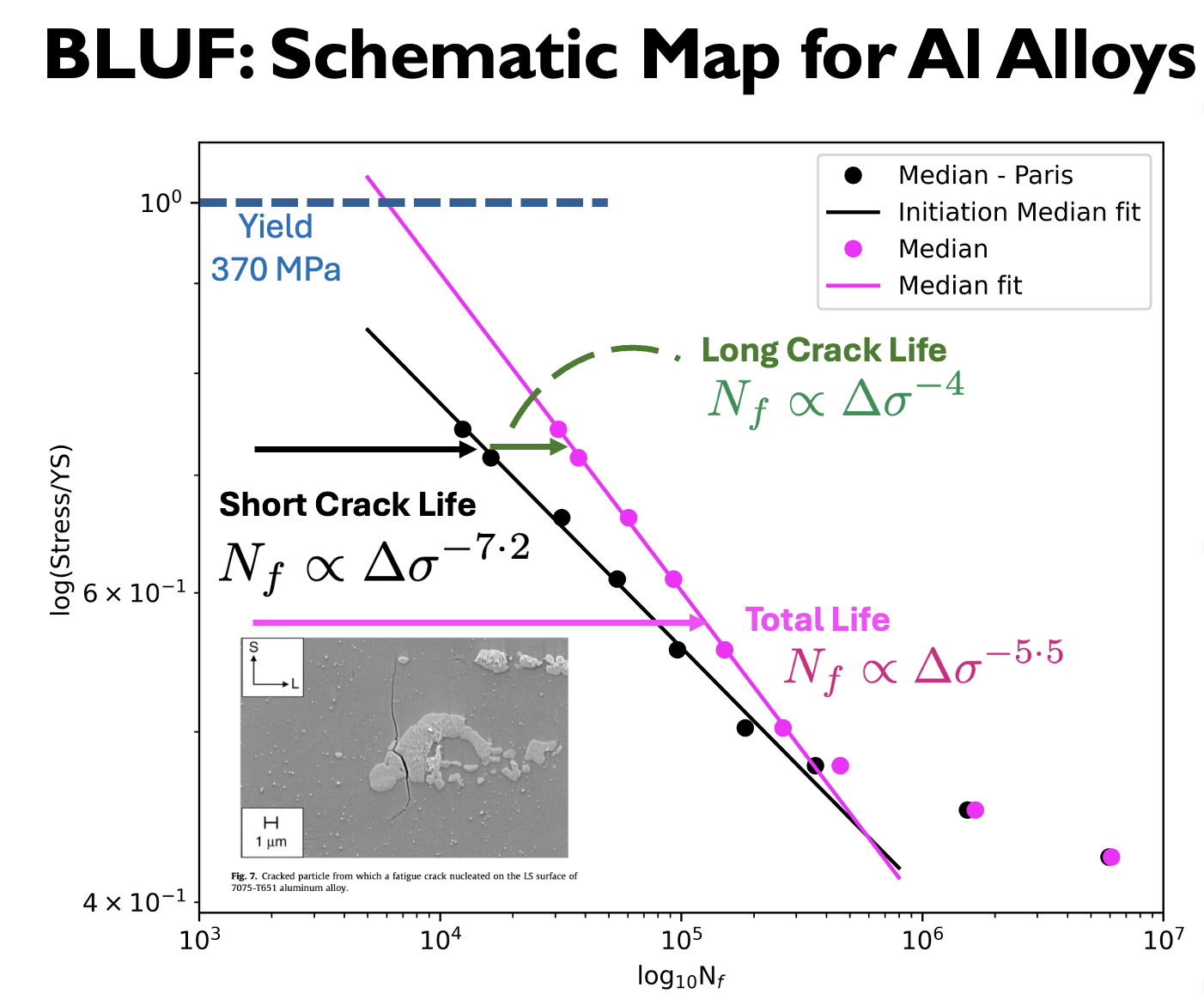
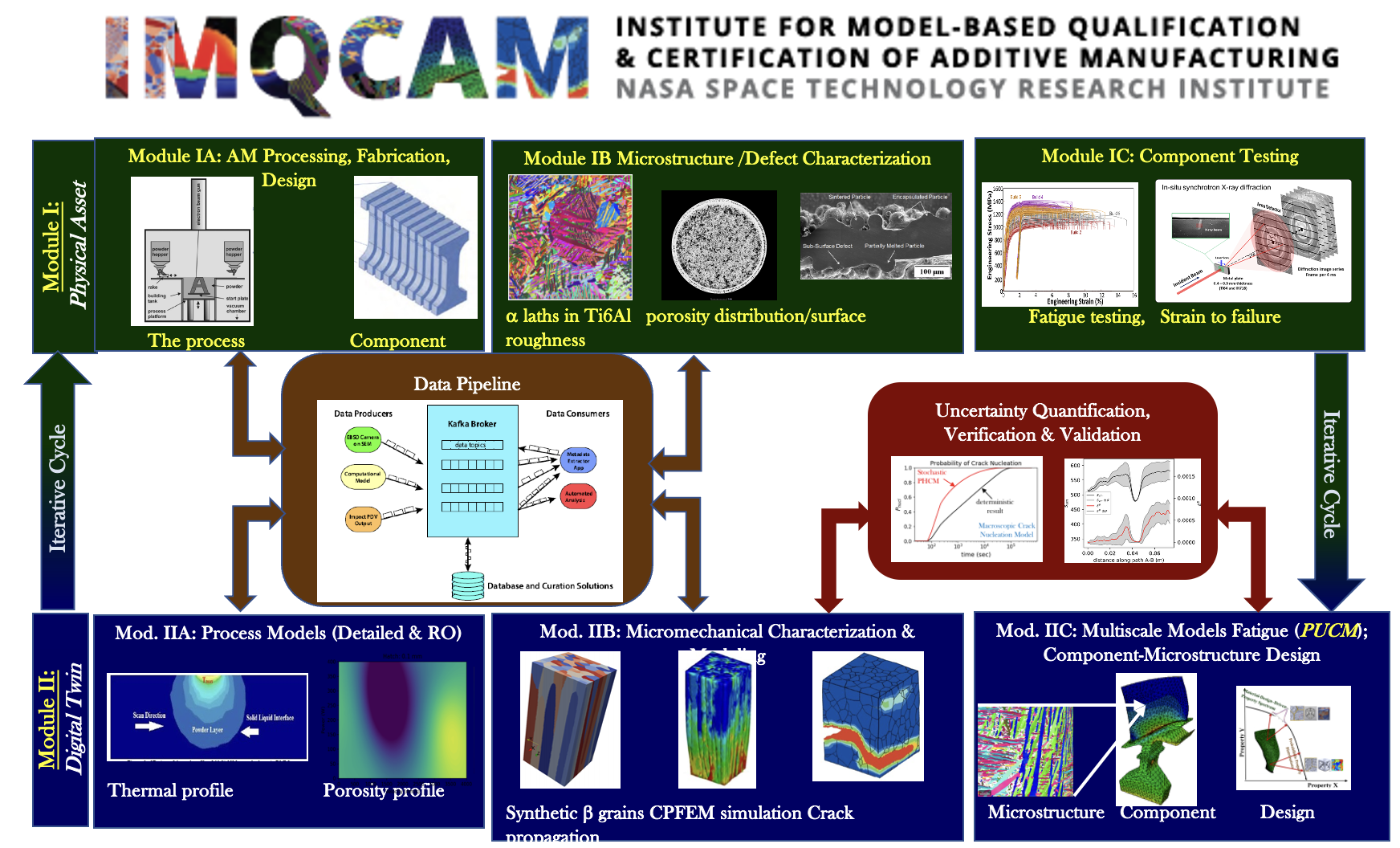
In recent years, 3D printing of metals has become a very important technology for rapid prototyping, rapid deployment of new designs, advanced part design and new alloys [See: engineering.cmu.edu/research/next_manufacturing]. The dominant powder bed technology means that metal powders are once again the focus of much attention, along with wire-deposition techniques. Although technologies are well established, general knowledge of and acceptance of 3D printing is limited, particularly where real parts have to go through qualification and certification (Q&C). CMU is bringing to bear its expertise in many different areas, for example, in its leadership of a NASA-ULI project that established a firm link between defect structures in AM parts and fatigue performance. This advance provides a base for building a computational digital twin (DT) of the metals-AM technology wherein CMU and Johns Hopkins Univ. are jointly leading a NASA Science & Technology Research Institute (STRI) with multiple academic and industrial partners. Our STRI aims to deploy many of these tools as well as the overall DT to industry and national laboratories.
Since texture, i.e. crystallographic preferred orientation, plays a dominant role in determining the anisotropy of a material, it is also important to verify the structure-property relationships. The spatial arrangement of orientations strongly influences the development of non-uniform plastic flow or localizations. Also, there many opportunities for optimization of texture for mechanical and magnetic properties, e.g. in laminations for electrical motors. The combination of advanced characterization tools and simulation techniques therefore provides an exciting approach to engineering the anisotropy of materials for optimum properties and performance.
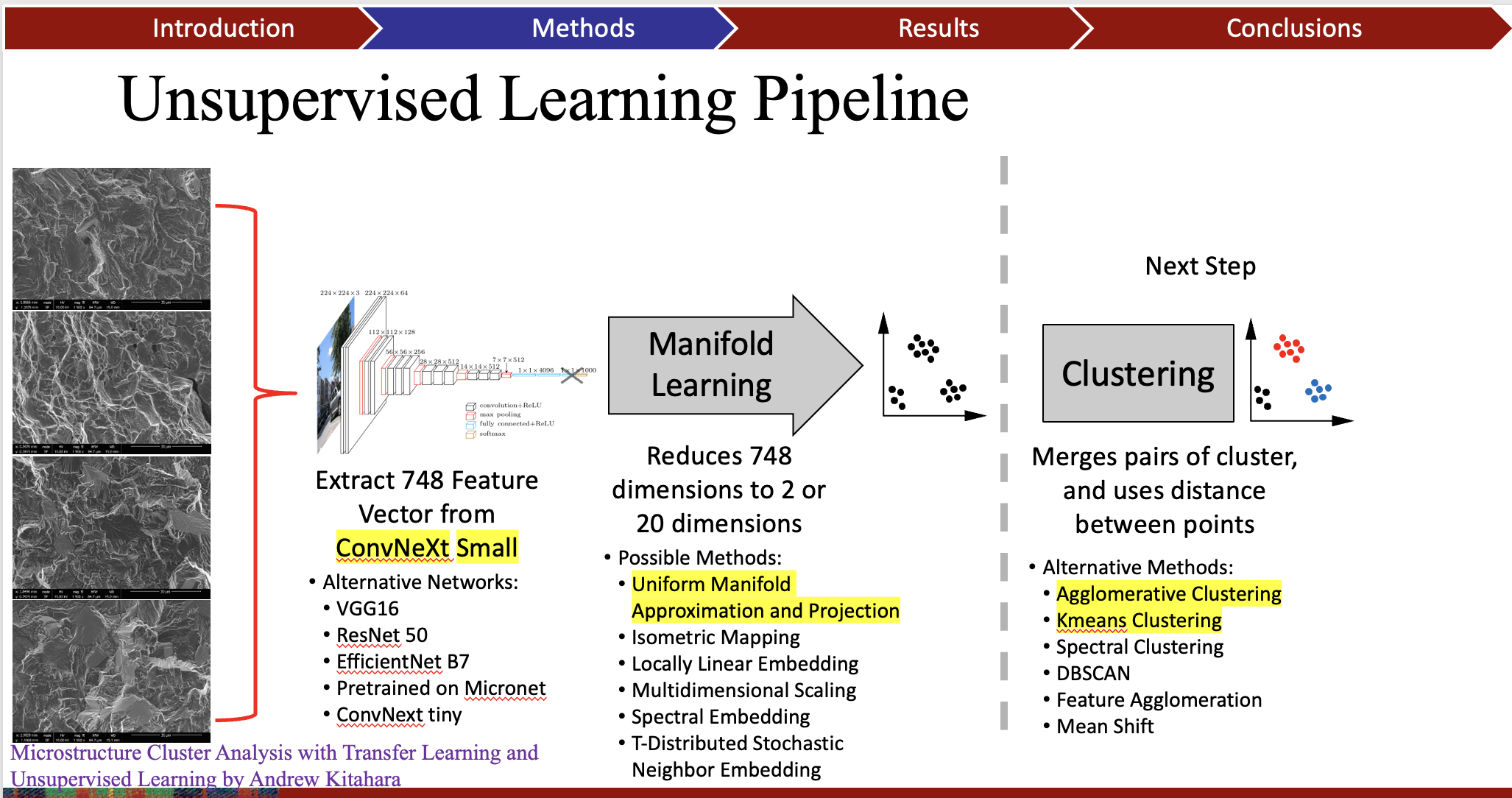
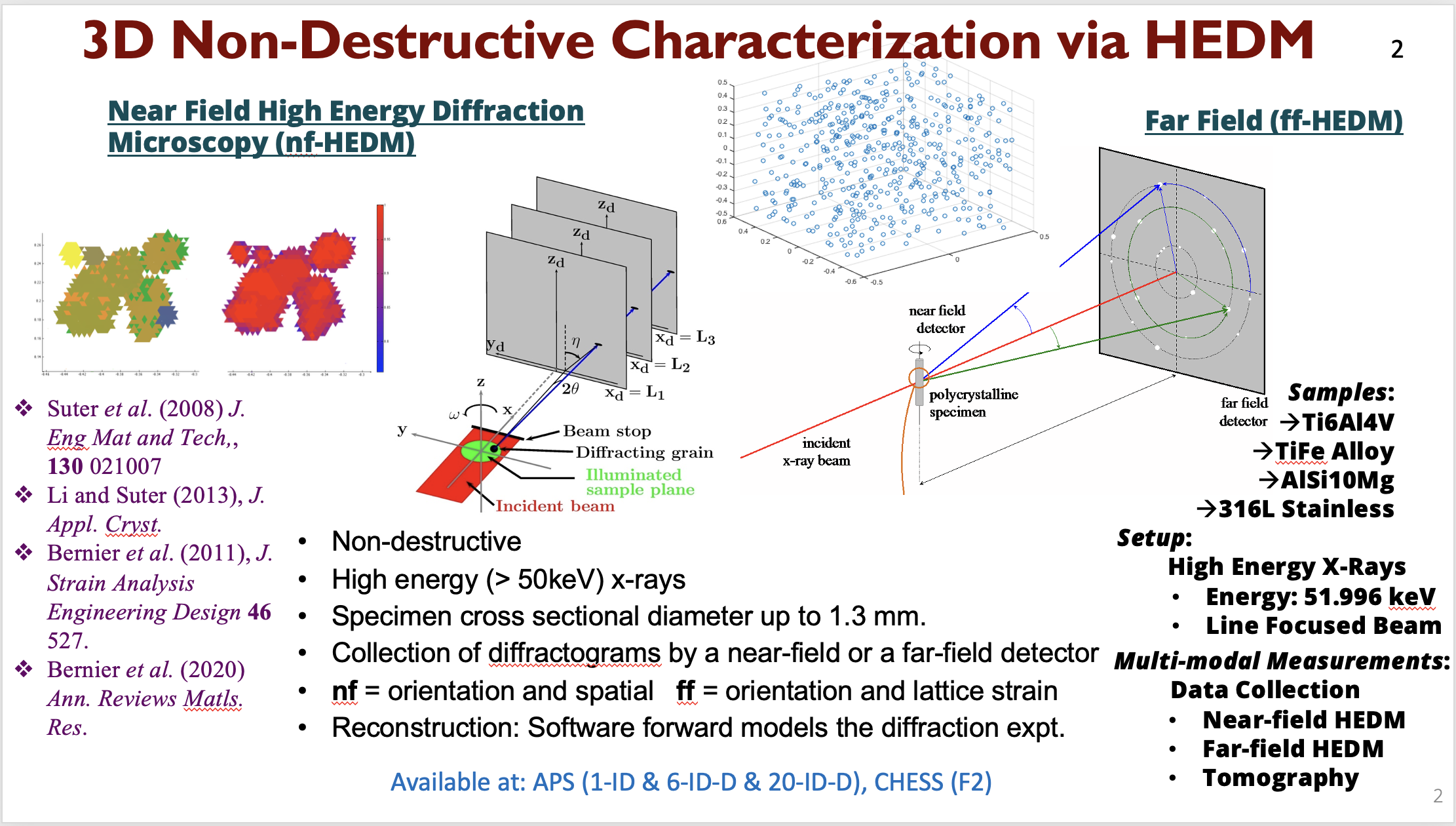
The relationships between materials processing, materials structure, or microstructure, and the properties of materials continues to stimulate the curiosity of materials scientists. Our research focuses on the relationship of mechanical properties to microstructure (including texture) and the development of tools for quantitative understanding. In the Rollett group, advanced characterization with synchrotron radiation is a particular area of emphasis, along with applying machine vision to quantifying microstructure and classifying powders.
There are many unresolved issues in microstructural evolution, such as how to make quantitative predictions of texture development during plastic deformation and subsequent annealing. The "abnormal" growth of certain types of grains at the expense of others clearly depends on the properties of the grain boundaries and on the driving forces for growth. Measurement of the grain boundary properties over the entire range of crystallographic types provides one key input to the problem. Understanding the effect of (anisotropic) grain boundary properties on microstructural evolution (grain growth, recrystallization) with Monte Carlo and cellular automata provides another essential part of the puzzle. Simulation and characterization of plastically deformed microstructures provides yet another part of the picture.
Students
Ann Choi
Rajib Halder
Greg Wong
Daniel Diaz
Milly Yi
Sarah Birchall
Sierra Green
David Reyes Ortiz
Je Choi
Gabriel Thompson